
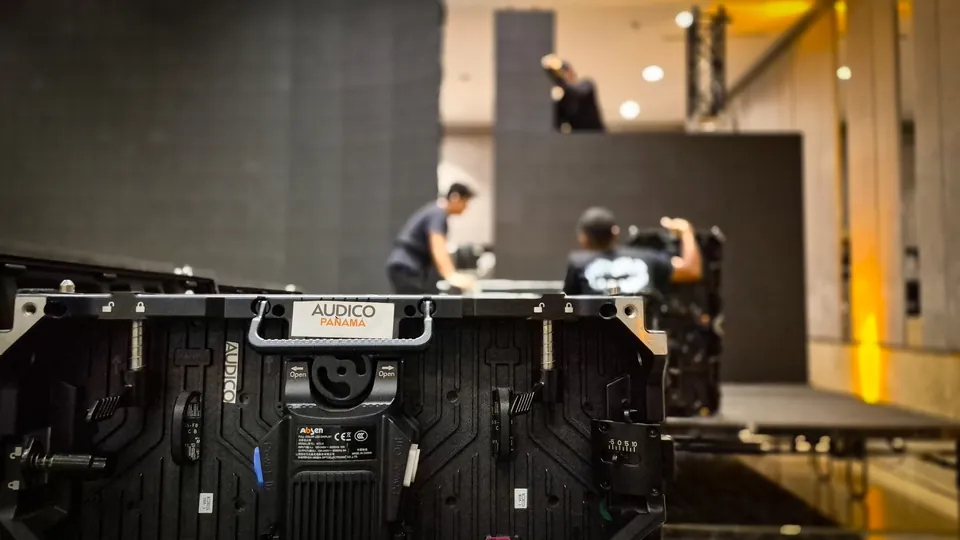
A medical congress in a hotel and a concert on an outdoor stage can use almost the same equipment: digital console, line array, moving heads, LED screens and truss. The work itself is nothing alike. What changes is who makes the decisions, how much room there is for error, how the crew talks on radio, how it dresses and what "on time" means. This guide explains those differences from the experience of a team that produces both kinds of event in Panama, and what you should ask your AV provider in each case.
The difference in one table
| Corporate event | Concert | |
|---|---|---|
| Technical goal | The message gets through: every word from the speaker, every slide, every corporate video. | The audience feels the show: sound impact, visual energy and effects. |
| Who decides | The client and its agency, through a minute-by-minute run of show. | The artist and their production manager, through the technical rider. |
| Schedule | Published agenda; the opening and every session start at the exact time. | There is a soundcheck and doors time, but the show adjusts to the artist. |
| Audio | Speech intelligibility, no feedback from lavalier and handheld mics, separate mixes for streaming and interpretation. | Sound pressure, audience coverage and the music mix; monitors for the musicians. |
| Lighting | Even front light for faces and cameras, stable color. | Show design: fast changes, color, beams and synced effects. |
| Video | Sharp presentations, speaker IMAG, a clean feed for the stream. | The artist's visual content, camera IMAG and, outdoors, high-brightness screens. |
| The technician | Discreet, formal and almost invisible; deals with executives and confidential information. | Fast and coordinated with the artist's crew; safety at height and under load comes first. |
| Room for error | Practically zero: a presentation that won't open is seen by the whole board. | Also low, but the audience forgives a few minutes' delay; it doesn't forgive bad sound. |
Punctuality: at a corporate event, the time is the time
At a concert everything revolves around the artist: the soundcheck follows the order in the rider and the start time can shift a few minutes without anyone calling it a failure. A corporate event has no such margin. The agenda is printed, the company president opens at the announced time, and behind every block there is a coffee break, a lunch or a flight that won't move.
That is why corporate technical punctuality isn't measured by when the crew arrives but by when everything is tested: audio, microphones with fresh batteries, screens, every speaker's laptop, videos with sound and, where needed, simultaneous interpretation and the live stream. All of it has to be ready before doors open, with time for a rehearsal with the master of ceremonies.
Hotels add one more factor: the room is almost never available when you want it. Setup often happens at night, after another event, or in a window of a few hours. For large conferences we always do a technical site visit first, precisely to plan that window and not discover problems on the day.
How the crew behaves at each type of event
At a corporate event
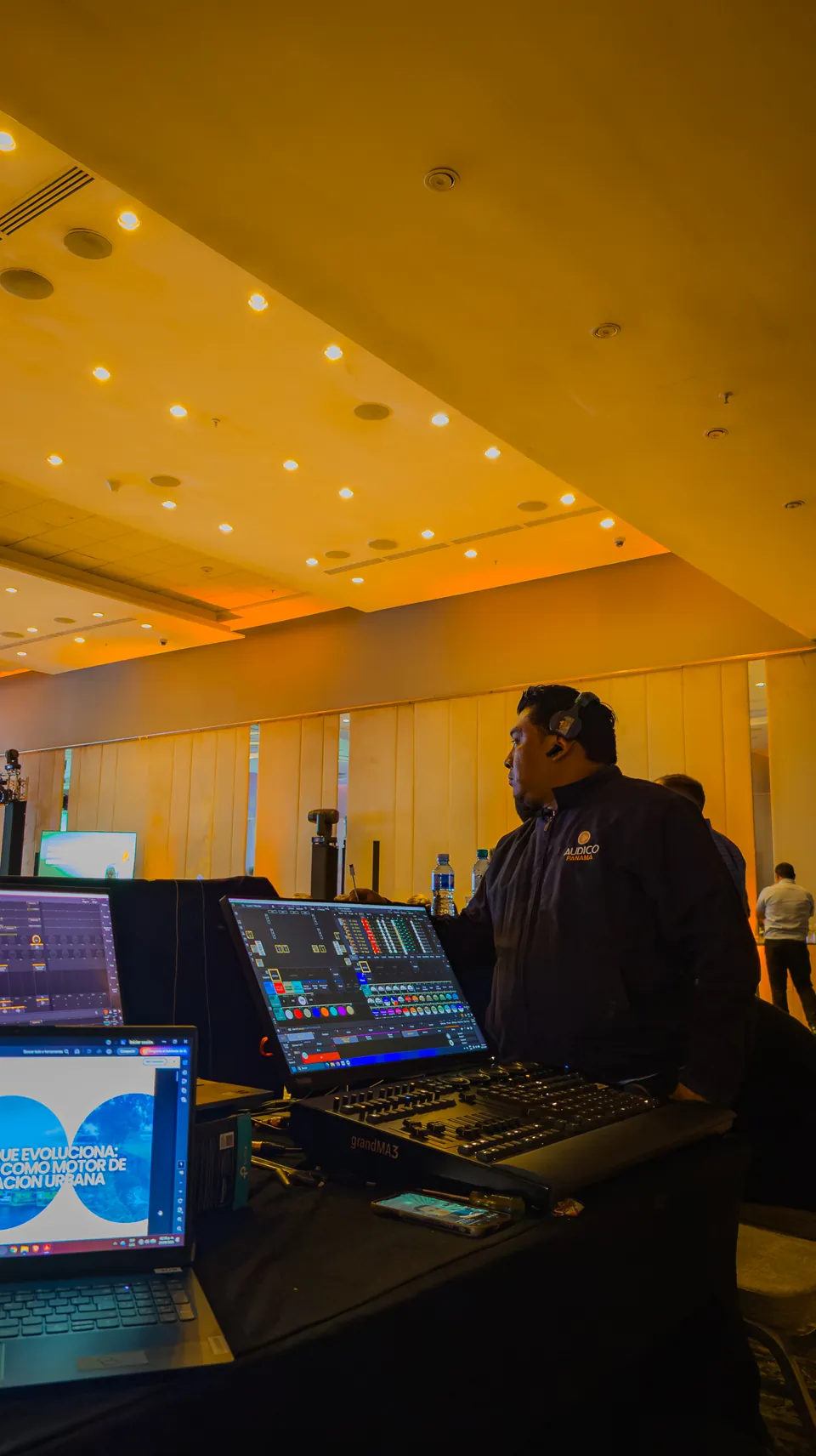
- Discretion. The technician is not part of the event. They work in black, move along the edges of the room, speak quietly on radio and keep their phone out of the guests' sight.
- Dealing with executives. Fitting a general manager's lavalier, explaining in ten seconds how to advance the slides and putting them at ease is part of the service too.
- Confidentiality. At a shareholders' meeting or a product launch, the video operator sees financial results or unannounced products before anyone else. What goes through the console stays in the room.
- Last-minute changes without drama. A speaker arrives with a new version of the deck five minutes before going on. The technician takes it, tests it and doesn't make anyone feel it was a problem.
At a concert
- The rider rules. The technician knows the artist's rider, coordinates with the touring FOH and monitor engineers and quickly solves whatever is missing.
- Safety first. More weight is flown, at greater height, with more people working at once. Rigging and structures are built and checked under strict procedures.
- Pace. Band, set and mix changes happen in minutes with the audience already inside.
Some things don't change at either: arrive earlier than agreed, know the signal flow by heart, keep backup equipment ready and never leave your position while the event is running.
Experience: not all experience transfers
An excellent concert sound engineer doesn't necessarily know how to control a six-person panel on lavaliers in a low-ceiling ballroom, or how to feed the interpreter booths and the stream at the same time. And an operator used to hotel ballrooms doesn't necessarily know how to work an international rider and a line array for thousands of people. When you hire, ask what kind of events the team that will run yours has done, not just the company.
3S Audiovisuales has produced events in Panama since 2010, with a technical team that has more than 20 years of experience. It shares its people and inventory with its sister company Audico Panama, which runs in-house AV for more than 12 hotels in Panama City. Hotel-level corporate standards are our daily work, while LED screens, stages, rigging and large-scale production are 3S's job. Together the two companies have produced more than 13,000 events.
What changes in the AV equipment
Audio
For corporate events the system is designed so speech is equally clear in the front and back rows, with no feedback and with separate mixes for recording, the stream and the interpreters. For a concert the design is about sound pressure and coverage for live music, plus the musicians' monitor system. More on professional event audio.
Lighting
A corporate event needs even front light and a stable color temperature so speakers look good in person and on camera. A concert needs a show design with moving heads, color and effects programmed song by song. See event lighting.
Video and LED screens
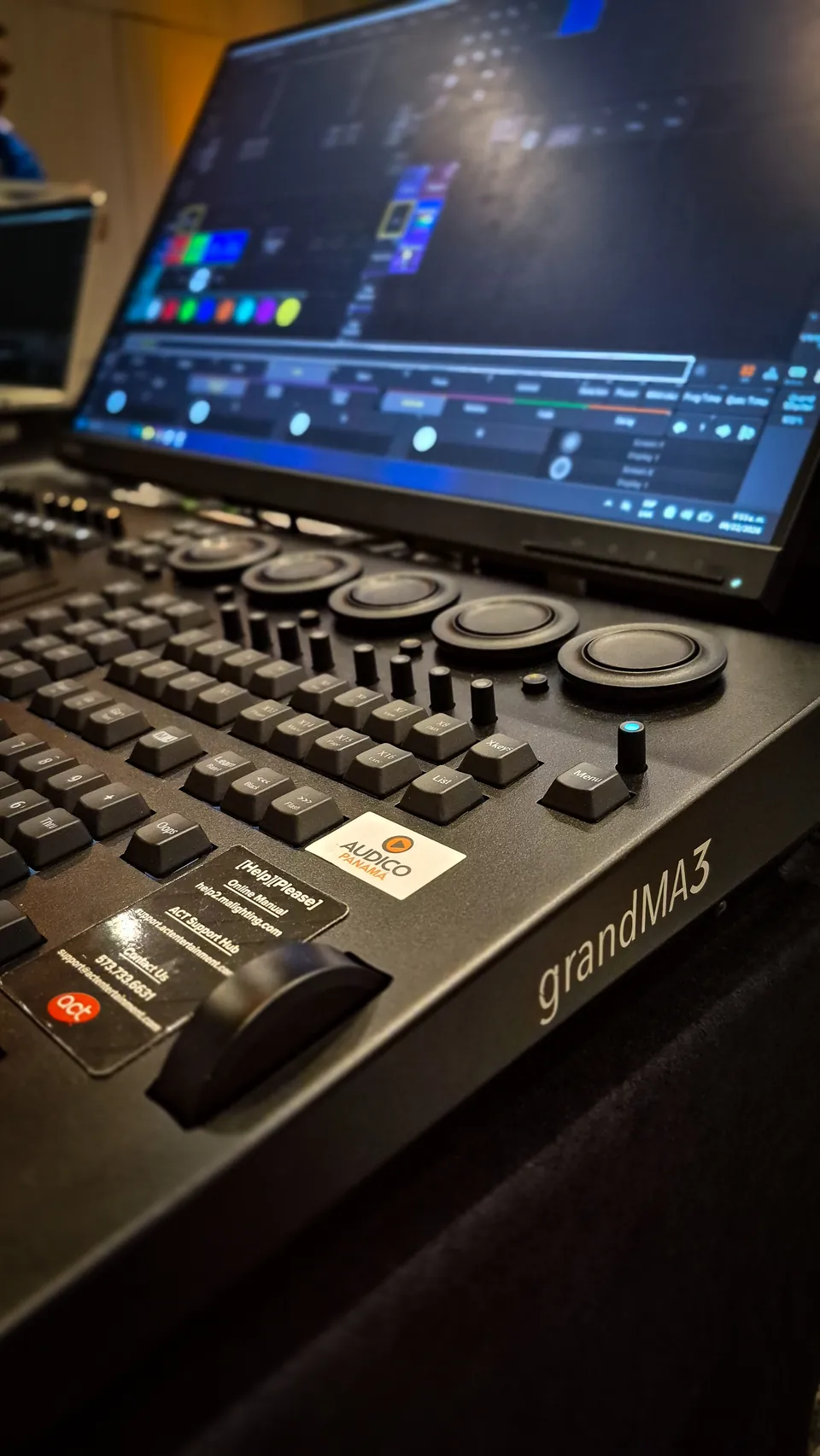
Indoors, a 2.6 mm pixel pitch LED screen gives the sharpness that slides and small text need; on an outdoor stage, brightness to compete with ambient light is what matters. In both cases, side screens with IMAG (the live image of the speaker or artist) help the back rows. See LED screen rental and our guide to LED screen rental prices (from $95/m² per day).
Checklist: what to ask your provider for a corporate event
- Who will operate my event, and what similar events have they worked?
- Do you do a technical site visit before the event?
- When will everything be tested, and when do we rehearse with the master of ceremonies?
- Who receives and tests the speakers' presentations, and until what time can they change?
- What backup equipment do you bring (microphones, laptop, video processor)?
- Does the technician stay for the whole event?
- How do you coordinate with the hotel, the agency and, if needed, the interpreters and the stream?
When your event mixes both worlds
An annual convention that closes with a live show, a gala with an orchestra or a launch with a guest artist needs both mindsets in the same night. The key is a run of show that marks the handover: until what time the corporate agenda rules, when the artist's rider takes over and how audio, lighting and screens are reconfigured without the audience noticing. See how we approach audiovisual production in Panama.
References
- ProSoundWeb — A matter of etiquette: it's about much more than audio in the world of corporates
- ProSoundWeb — Problem or solution? Doing it right and wrong on the jobsite (corporate AV)
- Streaming Media — Best practices for live events in the enterprise (run of show, crew roles)
- LASSO — 10 unwritten rules of professionalism in the live events industry